
Dental Implant Treatment
A titanium screw placed in the jawbone to replace a missing tooth root, restored with a crown, bridge or denture to bring back chewing function.
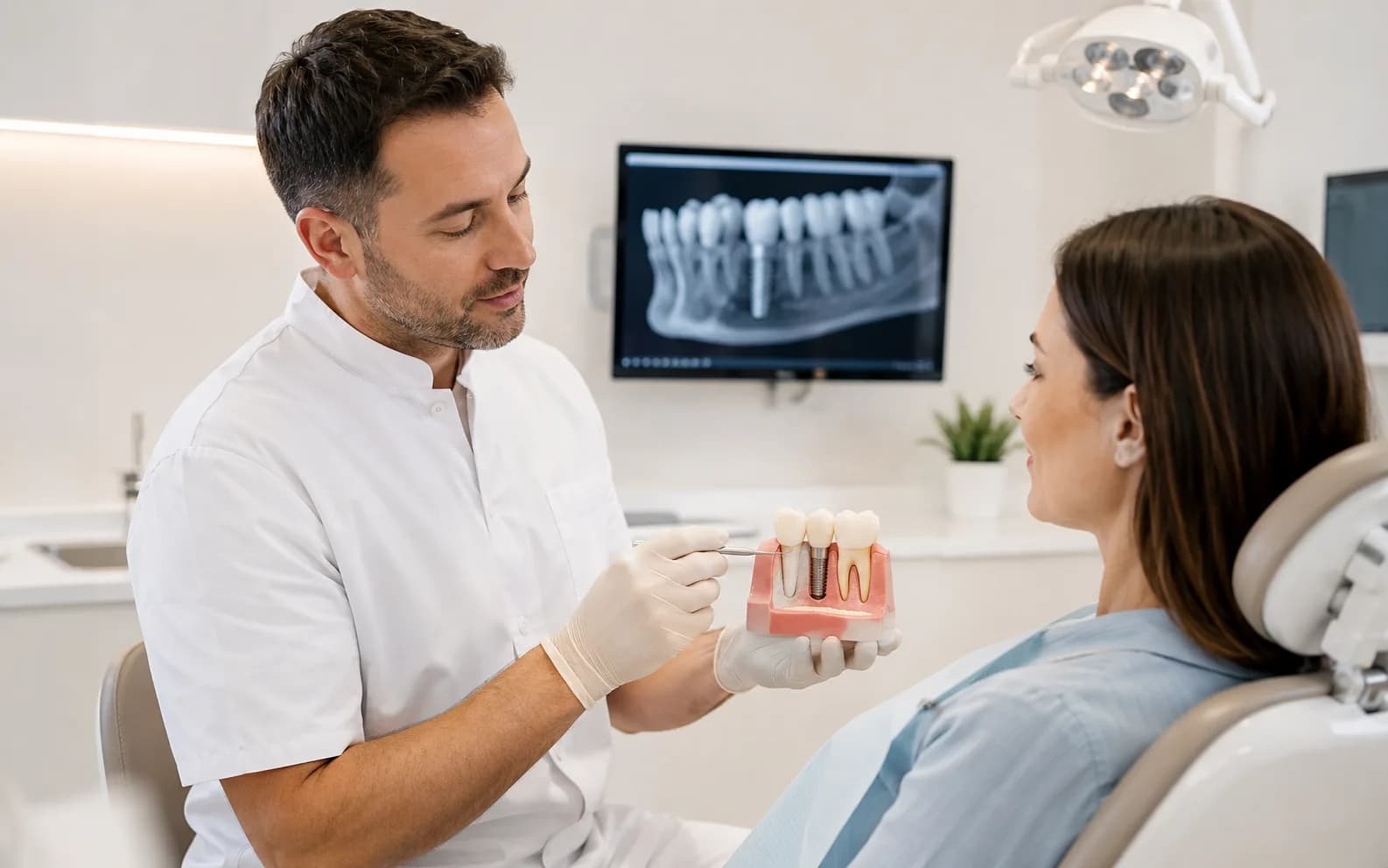
- Average duration
- 60 minutes
- Sessions
- Cerrahi seans 1 gün · iyileşme 2-4 ay · üst yapı 2-3 randevu
- Clinic
- Implants & Oral Surgery
What is a dental implant?
A dental implant is a titanium or titanium-alloy screw placed in the jawbone to take the place of a lost tooth root. Over several months the bone fuses with its surface (osseointegration), and a crown, bridge or denture placed on top restores function.
What sets an implant apart from the alternatives is that it leaves the neighbouring teeth alone. A conventional bridge requires the healthy teeth on either side of the gap to be reduced; an implant does not.
Who is it suitable for?
Suitability is measured in bone, not in years. Three things are assessed: the height and width of the bone, the health of the gums, and your general health. Uncontrolled diabetes, treatment for severe osteoporosis (bisphosphonates in particular), heavy smoking and untreated gum disease all affect the outcome directly, and no implant is planned before these are discussed.
Insufficient bone does not rule treatment out: grafting or a sinus lift can support the site. This lengthens the timeline and is planned separately.
How the process runs
1. Planning
A panoramic radiograph, three-dimensional tomography where indicated, and an intraoral scan are taken. Implant diameter, length, angle and depth are determined on this data. Where a surgical guide is used, the difference between the planned and the actual position is kept to a minimum.
2. Surgery
The procedure is performed under local anaesthesia. The gum is reflected, the implant bed prepared and the implant placed. For a single implant this usually takes 30 to 60 minutes, and you go home the same day.
3. Healing
On average two to three months in the lower jaw and three to four in the upper. If the gap is visible, a temporary restoration covers it throughout; nobody is left without teeth.
4. The restoration
Once integration is confirmed, an impression is taken and the crown, bridge or denture is made. With an intraoral scanner no impression putty is needed.
What to expect afterwards
Swelling and mild pain over the first two to three days are usual and are managed with cold compresses and the medication prescribed. Sutures, where placed, are usually removed after seven to ten days. The long-term outcome depends largely on daily cleaning and regular review: an implant cannot decay, but the gum and bone around it can become inflamed (peri-implantitis). A check-up and professional cleaning at least once a year is therefore advised.
Expectations
Correctly planned, an implant serves for many years — but no treatment can be guaranteed for life. Success is directly related to bone quality, oral hygiene, smoking and systemic health.
This page is general information and does not replace a dental examination. Whether the treatment suits you, and the method and duration, are decided only after an intraoral examination and radiographic assessment.
After treatment
- Apply cold to the area for the first 24 hours and avoid heat.
- Do not rinse on the first day; use the mouthwash your dentist advises afterwards.
- Do not chew hard food on that side until healing; keep to lukewarm, soft food.
- Smoking directly impairs healing — stop for at least two weeks.
- Take the prescribed antibiotics and painkillers exactly as directed.
- Call the clinic if swelling increases after the third day or you develop a fever.
Frequently asked about this treatment
No treatment can be guaranteed for life. The implant itself cannot decay, but the gum and bone around it can become inflamed (peri-implantitis), and that is the commonest cause of implant loss. Three things determine longevity: daily interdental cleaning, regular check-ups and not smoking.
The surgical appointment is a single day. Integration with the bone then takes on average two to three months in the lower jaw and three to four in the upper. The restoration (crown or bridge) needs two to three visits. If bone grafting is required, add four to six months. The total is given to you in writing at the planning appointment.
The information on this page is for general guidance and does not replace a dental examination. Treatment decisions are made after an intraoral examination and radiographic assessment.
Related treatments


Examination first, decisions after
Book an appointment: we will assess where things stand and talk through the options and how long each takes.
Your request is confirmed the same day.