
Zirconia Crowns
Metal-free crowns on a zirconia core, transmitting light close to a natural tooth, for teeth with extensive loss of structure.
- Average duration
- 60 minutes
- Sessions
- 2-3 randevu · ölçüden teslime 5-10 gün
- Clinic
- Cosmetic Dentistry
What is zirconia?
Zirconium dioxide is a white ceramic with high strength. In metal-backed crowns the substructure blocks light, so the tooth looks lifeless and a grey line can appear at the gum margin over time. Zirconia contains no metal; its light transmission is closer to natural tooth, and discolouration at the gum margin is not expected.
Crown or filling?
A crown covers the whole tooth and requires some healthy structure to be reduced. It is therefore not for small defects but for situations such as:
- Root-treated back teeth that have become brittle
- Teeth whose large filling fractures repeatedly
- Teeth that have lost their form through fracture or advanced wear
- Teeth used as a bridge abutment, or restorations on implants
Where a less invasive answer exists, a crown is not recommended: bonding, inlays/onlays or veneers preserve more tooth. That comparison is made together at the examination.
The process
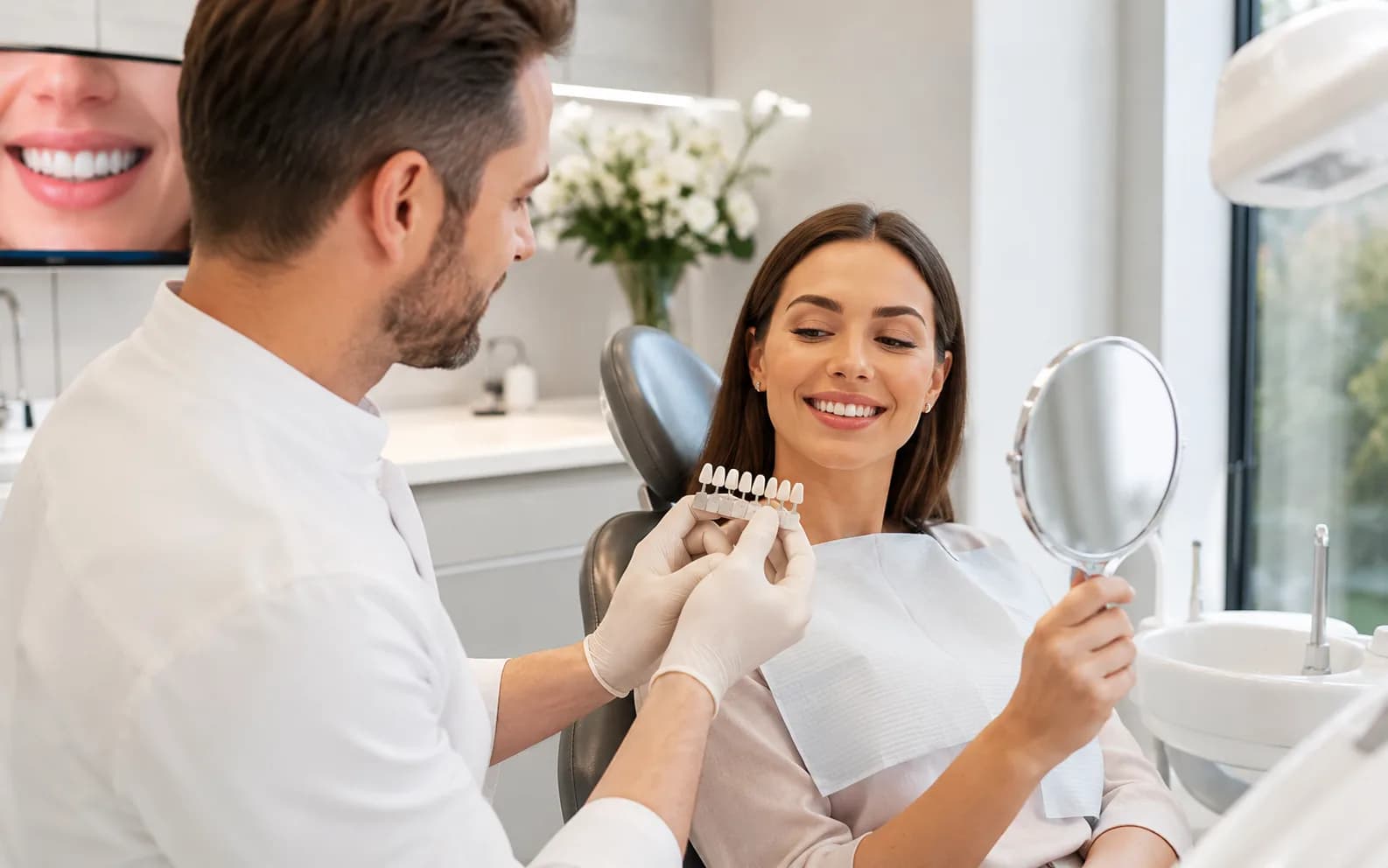
- Planning. Examination, radiographs and shade selection. In the aesthetic zone, digital smile planning lets the proposed form be reviewed on screen.
- Preparation. The tooth is reduced by the thickness of the crown, under local anaesthesia.
- Impression. Taken with an intraoral scanner or conventionally.
- Temporary crown. The tooth is never left exposed during the laboratory stage.
- Try-in and cementation. Fit, bite and shade are checked before final cementation.
Care and lifespan
Zirconia cannot decay, but the tooth underneath can. Longevity depends on the health of the gum at the margin and on daily interdental cleaning. If you clench or grind (bruxism), a night guard is advised; without it the risk of ceramic cracking rises.
An annual check-up with professional cleaning is recommended.
Expectations
Shade and form are planned to harmonise with the natural teeth. Ceramic is not a one-to-one copy of the living surface of a natural tooth, however; the colour of neighbouring teeth, the gum level and the lip line all shape the result. These details are discussed beforehand.
This page is general information and does not replace a dental examination. Whether the treatment suits you, and the method and duration, are decided only after an intraoral examination and radiographic assessment.
After treatment
- Avoid very hard food for the first 24 hours after cementation.
- Use interdental brushes or floss daily — decay starts beneath the crown.
- If you clench or grind, wear the night guard as advised.
- Do not crack ice or nuts with your teeth.
- If you use a water flosser, start on a low setting.
- Book an annual check-up with professional cleaning.
Frequently asked about this treatment
In a metal-backed crown the substructure blocks light: the tooth can look lifeless, and if the gum recedes a grey line may appear at the margin. Zirconia contains no metal, its light transmission is closer to natural tooth, and that discolouration is not expected. Both are strong enough for clinical use; the choice usually comes down to the position of the tooth and aesthetic expectations.
The information on this page is for general guidance and does not replace a dental examination. Treatment decisions are made after an intraoral examination and radiographic assessment.
Related treatments

Examination first, decisions after
Book an appointment: we will assess where things stand and talk through the options and how long each takes.
Your request is confirmed the same day.