
Gum Treatment (Periodontics)
Scaling and deep root surface debridement to halt calculus build-up, gum inflammation and bone loss.
- Average duration
- 45 minutes
- Sessions
- 1-4 seans · üç ayda bir bakım kontrolü
- Clinic
- General Dentistry
What is gum disease?
The bacterial film on the tooth surface (plaque) hardens into calculus within 24 to 48 hours. Calculus cannot be brushed away and creates a surface that shelters bacteria. The body responds with inflammation: gingivitis. At this stage the process is fully reversible.
Untreated, the inflammation advances into the fibres and bone holding the tooth: periodontitis. Lost bone does not come back on its own. Early treatment is therefore worth far more than advanced treatment.
Signs
Bleeding when brushing, red and swollen gums, persistent bad breath, receding gums and teeth appearing longer, slight mobility or drifting.
In smokers, bleeding is suppressed and the disease progresses more quietly. "No bleeding, no problem" does not hold.
Treatment
Scaling
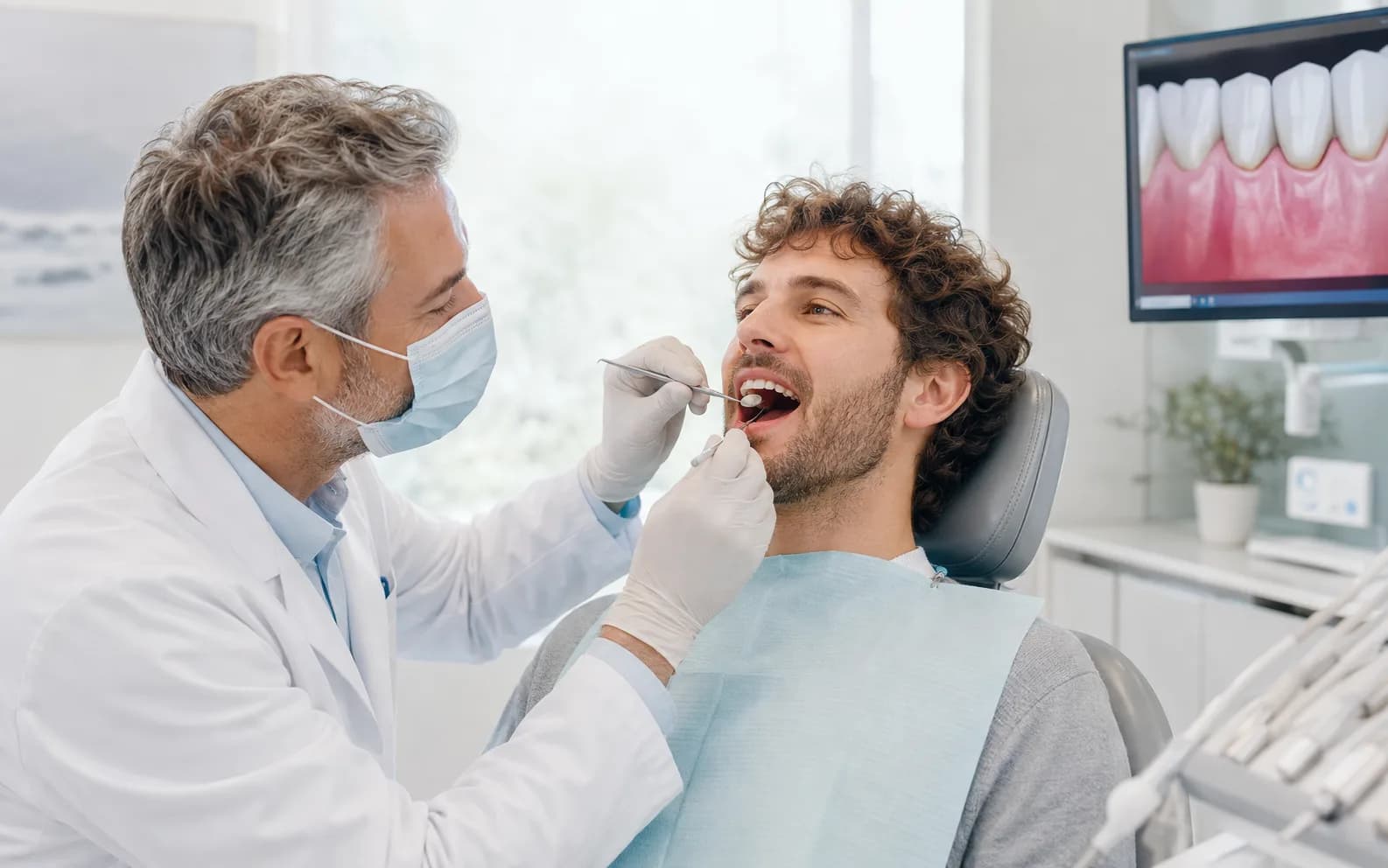
Ultrasonic tips and hand instruments remove calculus and plaque, and the surface is then polished. It is completed in one visit. The procedure does not wear the teeth down; sensitivity may last a few days.
Deep cleaning (root surface debridement)
Where pockets have deepened, the root surface beneath the gum is cleaned under local anaesthesia. This is usually done by quadrant over two to four visits.
Surgical stage
Advanced cases may need a flap procedure or bone support to reach the pocket directly. That decision follows a re-assessment after cleaning — non-surgical treatment always comes first.
Afterwards
What determines the outcome is not the appointment in the clinic but daily cleaning at home. No treatment lasts without interdental brushes or floss. Maintenance every three months is advised for the first year; once the condition is stable the interval is extended.
This page is general information and does not replace a dental examination. Whether the treatment suits you, and the method and duration, are decided only after an intraoral examination and radiographic assessment.
After treatment
- Sensitivity to hot and cold for a few days is possible; use a desensitising toothpaste.
- Avoid very hot and acidic drinks on the first day.
- Use interdental brushes or floss every day, ideally in the evening.
- Brush twice a day for two minutes with a soft to medium brush.
- Smoking directly lowers the success of treatment — ask us about cessation support.
- Keep to your three-monthly maintenance appointments.
Frequently asked about this treatment
No — the opposite. Bleeding is a sign of inflammation, and the cause of the inflammation is plaque. Brushing less increases plaque and deepens the inflammation. The right approach is to keep brushing regularly with a soft brush and add interdental cleaning; as the inflammation resolves, the bleeding stops. If it persists beyond two weeks, an examination is needed.
The information on this page is for general guidance and does not replace a dental examination. Treatment decisions are made after an intraoral examination and radiographic assessment.
Related treatments

Examination first, decisions after
Book an appointment: we will assess where things stand and talk through the options and how long each takes.
Your request is confirmed the same day.