
Root Canal Treatment
Cleaning the inflamed or necrotic nerve tissue and sealing the canal so the tooth can be kept rather than extracted.
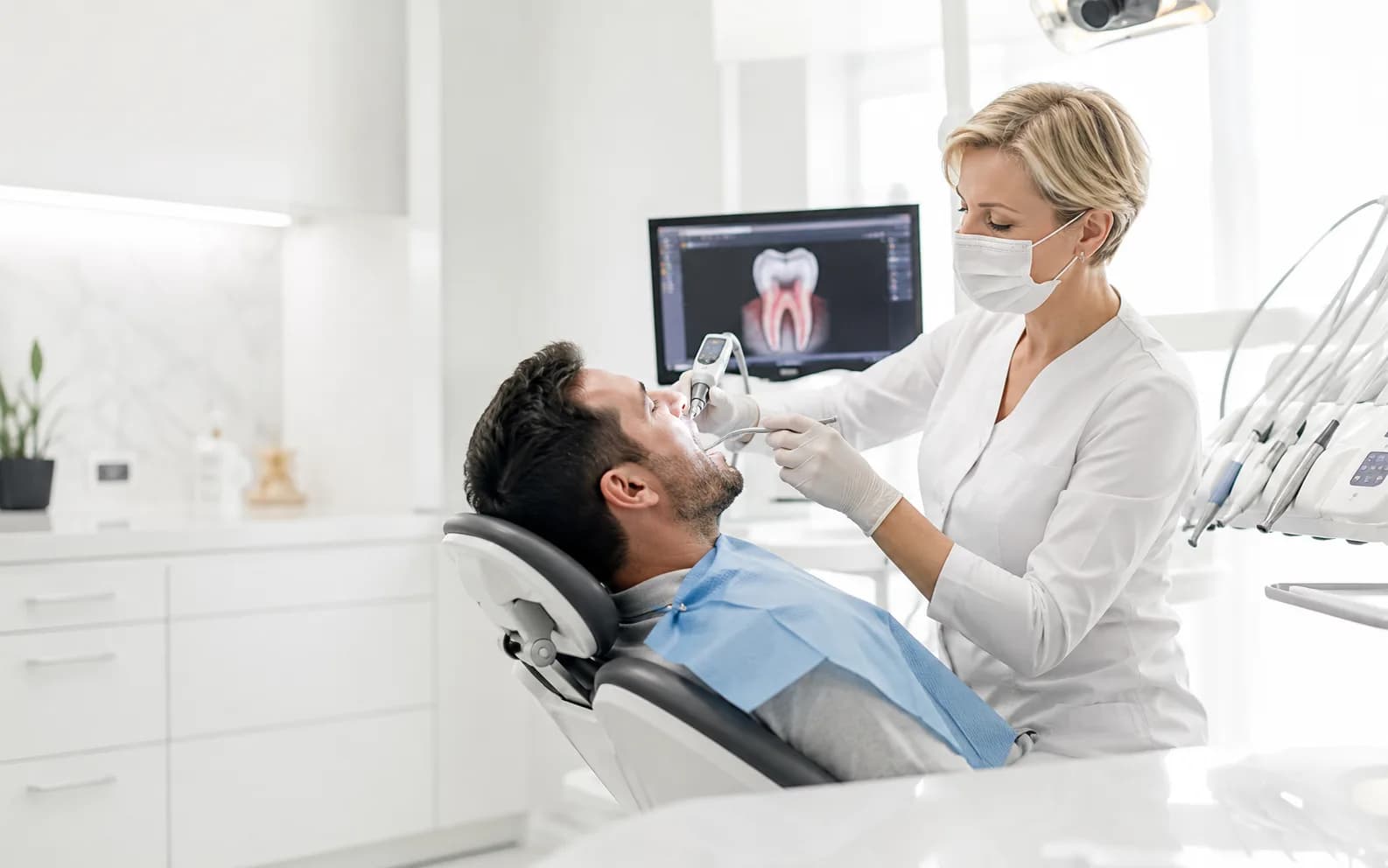
- Average duration
- 60 minutes
- Sessions
- 1-2 seans · üst yapı için ayrı randevu
- Clinic
- General Dentistry
Why a root canal?
Inside every tooth is a space holding blood vessels and nerve tissue (the pulp). When deep decay, a fracture or repeated procedures reach it, the pulp becomes inflamed and does not recover on its own. Root canal treatment removes the inflamed tissue and seals the canal, allowing the tooth to stay in place instead of being extracted.
Keeping your own tooth is better than the best implant: a natural tooth retains its attachment to the bone and the fine sensory network around it.
Signs
Pain that lingers after hot or cold, throbbing that worsens at night, sharp pain on biting, a darkening tooth, or recurring swelling or a sinus tract on the gum. Sometimes there are no symptoms at all and inflammation at the root tip shows up on a routine radiograph.
How it is done
1. Anaesthesia and isolation
The tooth is anaesthetised, then isolated from saliva with a rubber dam. This step is not optional: keeping the canal sterile determines the outcome directly.
2. Cleaning the canals
Access is made through the crown and the inflamed tissue removed. The canals are shaped with file systems and irrigated with disinfectant solutions. Working length is confirmed with an electronic apex locator and radiographs.
3. Filling
The canal is filled completely with a biocompatible material, usually gutta-percha. Depending on the extent of the inflammation, treatment may finish in one visit or an intracanal medicament may be left between visits.
4. The restoration
A root-treated tooth becomes brittle. A crown or onlay is advised, particularly for back teeth; a tooth left with a filling alone carries a markedly higher fracture risk. This step is part of the treatment, not an extra.
Is it painful?
The procedure itself feels no different from having a filling once the tooth is numb. The pain beforehand comes from the inflammation that made treatment necessary. Tenderness on biting for a few days afterwards is usual and settles with simple analgesics.
Outcome and follow-up
Success rates for well-executed root canal treatment are high, but healing of the lesion at the root tip takes months and needs radiographic review. Checks at six and twelve months are planned for that reason.
This page is general information and does not replace a dental examination. Whether the treatment suits you, and the method and duration, are decided only after an intraoral examination and radiographic assessment.
After treatment
- Do not chew on that side or bite your lip until the numbness wears off (2-3 hours).
- Avoid hard food on that tooth until the final restoration is placed.
- Mild tenderness on biting in the first days is normal; take the analgesic advised.
- Call the clinic if you develop swelling, fever or increasing pain.
- Do not postpone the appointment for the crown or filling — fracture risk rises.
- Attend the six- and twelve-month review appointments.
Frequently asked about this treatment
This is dentistry's most persistent myth. The reputation comes not from the treatment but from the inflammation that makes it necessary. Once the tooth is numb, the procedure feels no different from having a filling. Tenderness on biting for a few days afterwards is usual and is controlled with simple analgesics.
For back teeth, yes. A root-treated tooth loses its internal moisture and nutrient supply and becomes brittle; left with a filling alone, the risk of a vertical fracture rises markedly, and such a fracture usually ends in extraction. A crown or onlay is an integral part of the treatment.
The information on this page is for general guidance and does not replace a dental examination. Treatment decisions are made after an intraoral examination and radiographic assessment.
Related treatments

Examination first, decisions after
Book an appointment: we will assess where things stand and talk through the options and how long each takes.
Your request is confirmed the same day.