
Porcelain Veneers
Thin porcelain laminates bonded to the visible surface of front teeth to correct colour, form and small gaps.

- Average duration
- 75 minutes
- Sessions
- 2-3 randevu · mock-up ile önizleme
- Clinic
- Cosmetic Dentistry
What is a veneer?
A veneer is a porcelain laminate 0.3 to 0.7 mm thick, bonded only to the front surface of the tooth. Unlike a crown it does not encircle the tooth, so far less tooth structure is removed.
With the right indication, a veneer is the least invasive route to an aesthetic goal. With the wrong indication it means cutting healthy teeth for no reason — making that distinction is the most important part of the examination.
When is it suitable?
- Permanent discolouration that does not respond to whitening (tetracycline staining, for example)
- Small gaps between teeth (diastema)
- Chipped or worn incisal edges
- Differences in length and form
- Mild irregularity, where orthodontics is declined and the bite allows
When it is not suitable: significant crowding (orthodontics first), untreated gum disease, active decay, uncontrolled clenching, and very thin or insufficient enamel.
The process
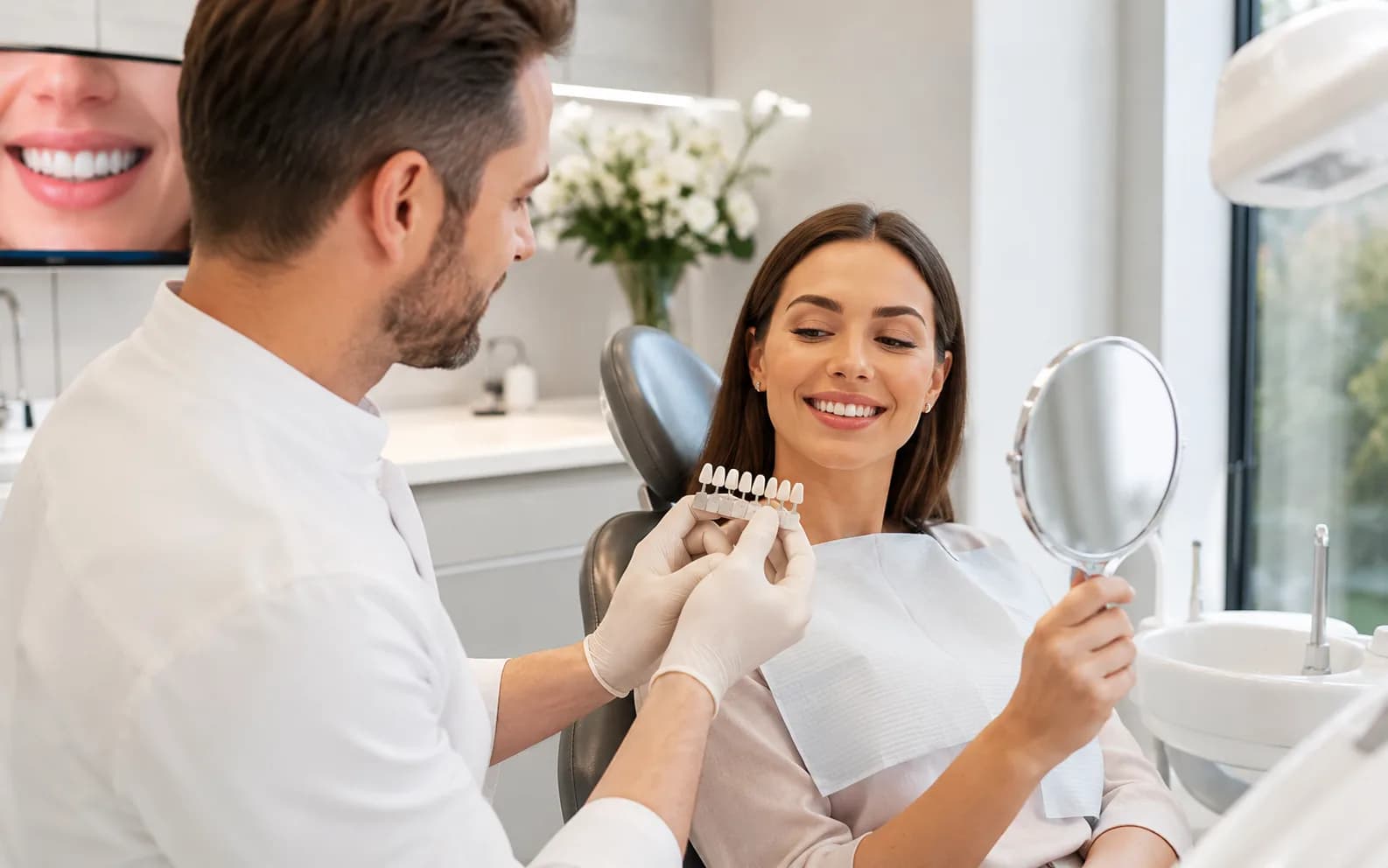
- Analysis and mock-up. After digital planning, the proposed form is placed directly on your teeth in a temporary material. You see it in the mirror and feel it while speaking. This is where the right to change your mind is exercised — no tooth has been touched yet.
- Preparation. A very thin layer of enamel is removed according to the approved design.
- Impression and temporaries. Digital scan or conventional impression; temporary veneers are worn during the laboratory stage.
- Bonding. After a shade and fit try-in, the veneers are bonded with a dedicated adhesive system.
Longevity and care
Porcelain does not change colour or take up stain, but it can fracture. A night guard is essential for anyone who clenches. Nail biting, chewing pens and opening packaging with your teeth shorten a veneer's life directly.
Gum health matters as much as marginal fit: no aesthetic work looks good above bleeding gums. Gum treatment is therefore completed before veneers.
This page is general information and does not replace a dental examination. Whether the treatment suits you, and the method and duration, are decided only after an intraoral examination and radiographic assessment.
After treatment
- Avoid very hard and sticky food for the first week.
- Do not open packaging with your teeth, bite nails or chew pens.
- If you clench, wear the night guard every night.
- Keep up interdental cleaning; the margin is where decay starts.
- Do not use abrasive whitening toothpaste; it dulls porcelain.
- Have a check-up and professional cleaning every six months.
Frequently asked about this treatment
A very thin layer of enamel (usually 0.3 to 0.7 mm) is removed for a veneer — far less than for a crown, but the step is not reversible. That is why the mock-up stage matters: you see the design in your own mouth before any tooth is touched and can still decide against it. In some cases minimal- or no-preparation veneers can be considered.
The information on this page is for general guidance and does not replace a dental examination. Treatment decisions are made after an intraoral examination and radiographic assessment.
Related treatments
Examination first, decisions after
Book an appointment: we will assess where things stand and talk through the options and how long each takes.
Your request is confirmed the same day.