
Fillings & Decay Treatment
Removing decay and restoring the tooth with composite, keeping as much natural tooth structure as possible.
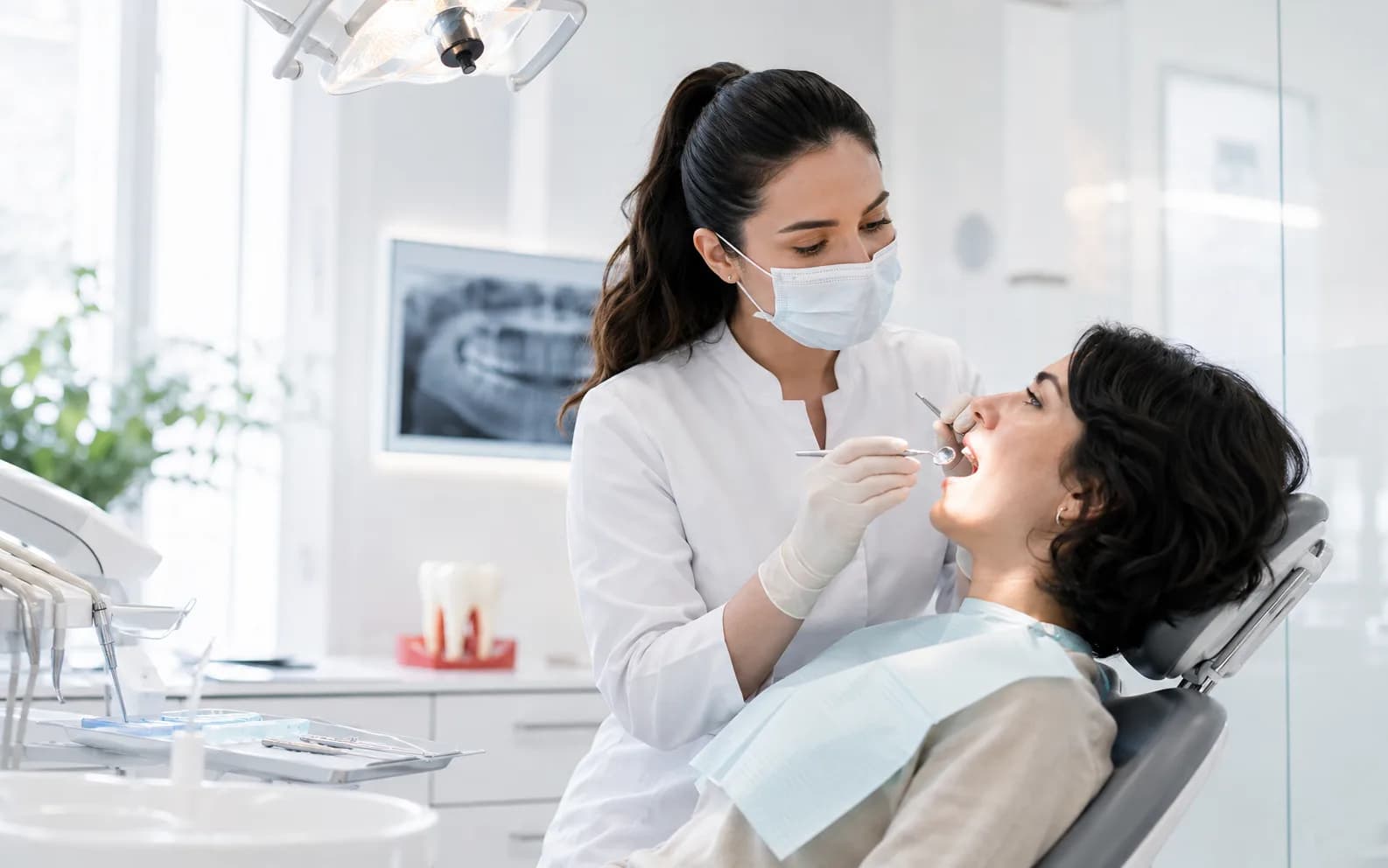
- Average duration
- 30 minutes
- Sessions
- Tek seans · diş başına 20-40 dakika
- Clinic
- General Dentistry
How decay develops
Bacteria in the mouth turn dietary sugar into acid, and that acid dissolves minerals from the enamel. Saliva repairs some of this loss during the day; but if the frequency tips the balance, the enamel surface collapses and decay begins. What matters is not the amount of sugar but the frequency: a sweet drink sipped through the day does more harm than a dessert eaten at once.
Does an early lesion need a filling?
No. Lesions confined to the enamel that have not yet cavitated (white spot lesions) can be monitored with fluoride application and a change of habits. That is not "let's wait" but "let's measure and watch", and it is followed up at a review appointment.
Once a cavity has formed, a filling is needed; it will not close on its own.
Composite fillings
Tooth-coloured composite resins are used today in both front and back teeth. Composite bonds chemically to the tooth, so healthy structure does not have to be cut away for retention as it did with amalgam — less tooth is lost.
The visit runs as follows: the tooth is anaesthetised (not always necessary for shallow decay), the decayed tissue is removed, the surface is prepared with etch and bonding agent, composite is placed in layers and light-cured, then the bite is checked and the filling polished.
Deep lesions
Where decay comes very close to the nerve, approaches aimed at keeping the tooth vital (indirect pulp capping) may be used. If the nerve has been reached, root canal treatment comes into question. That distinction is made during the procedure and from radiographic findings; both possibilities are explained beforehand.
How long does a filling last?
The lifespan of a composite depends on its size, the position of the tooth, bite forces, any clenching habit and oral hygiene. Margins and the underlying surface are assessed at each check-up; if leakage is caught early only the filling is renewed, not the whole tooth.
This page is general information and does not replace a dental examination. Whether the treatment suits you, and the method and duration, are decided only after an intraoral examination and radiographic assessment.
After treatment
- Composite sets under the curing light; you can eat straight afterwards.
- If you were anaesthetised, avoid chewing until sensation returns.
- Mild sensitivity to hot and cold in the first days is usual and fades.
- Call us if the filling feels high or biting is uncomfortable.
- Without cleaning between the teeth, decay will recur in the same place.
- Plan a check-up every six months.
The information on this page is for general guidance and does not replace a dental examination. Treatment decisions are made after an intraoral examination and radiographic assessment.
Related treatments
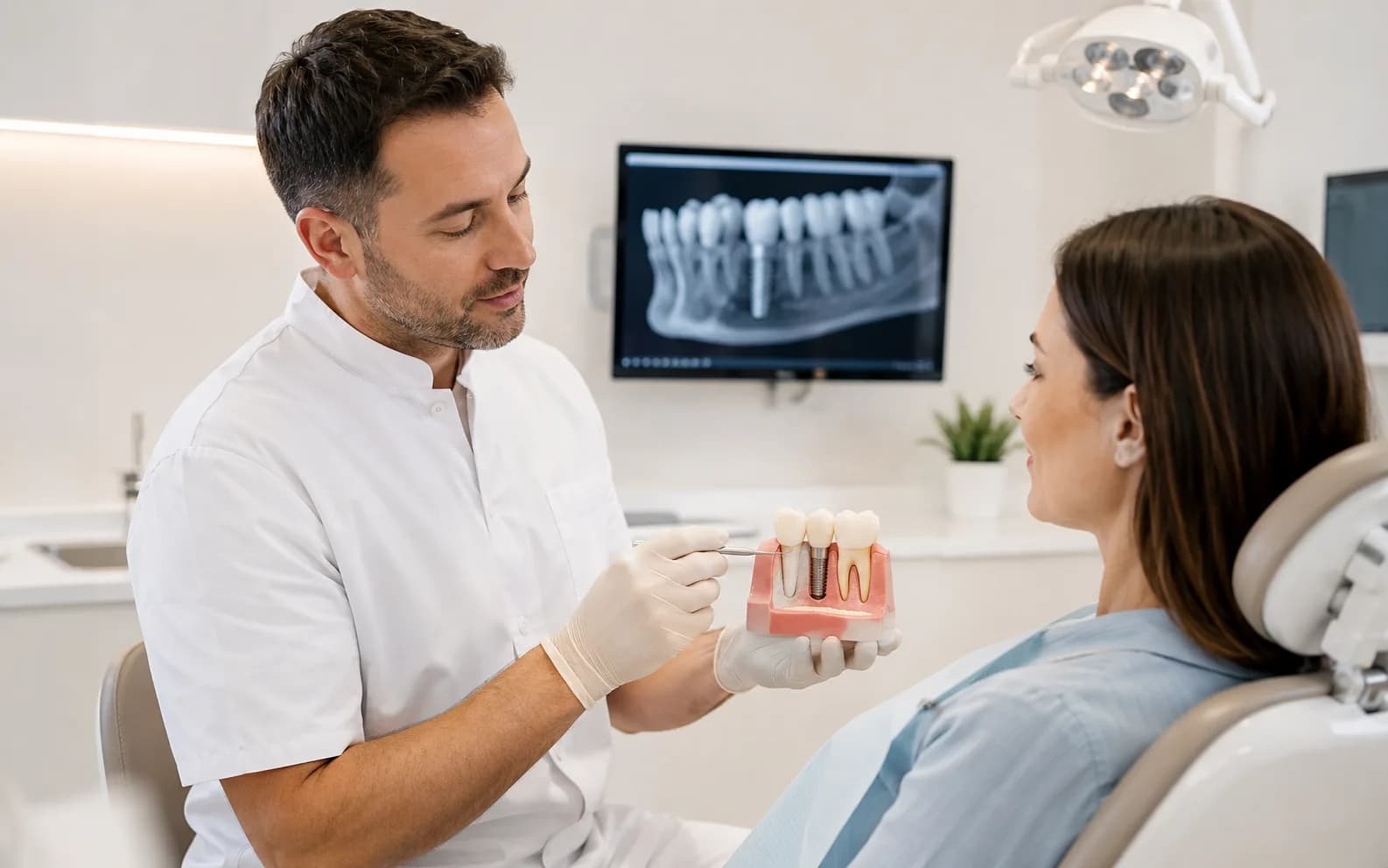


Examination first, decisions after
Book an appointment: we will assess where things stand and talk through the options and how long each takes.
Your request is confirmed the same day.