
Fissure Sealants & Fluoride
Sealing the surfaces of permanent molars most prone to decay, plus fluoride to strengthen enamel.
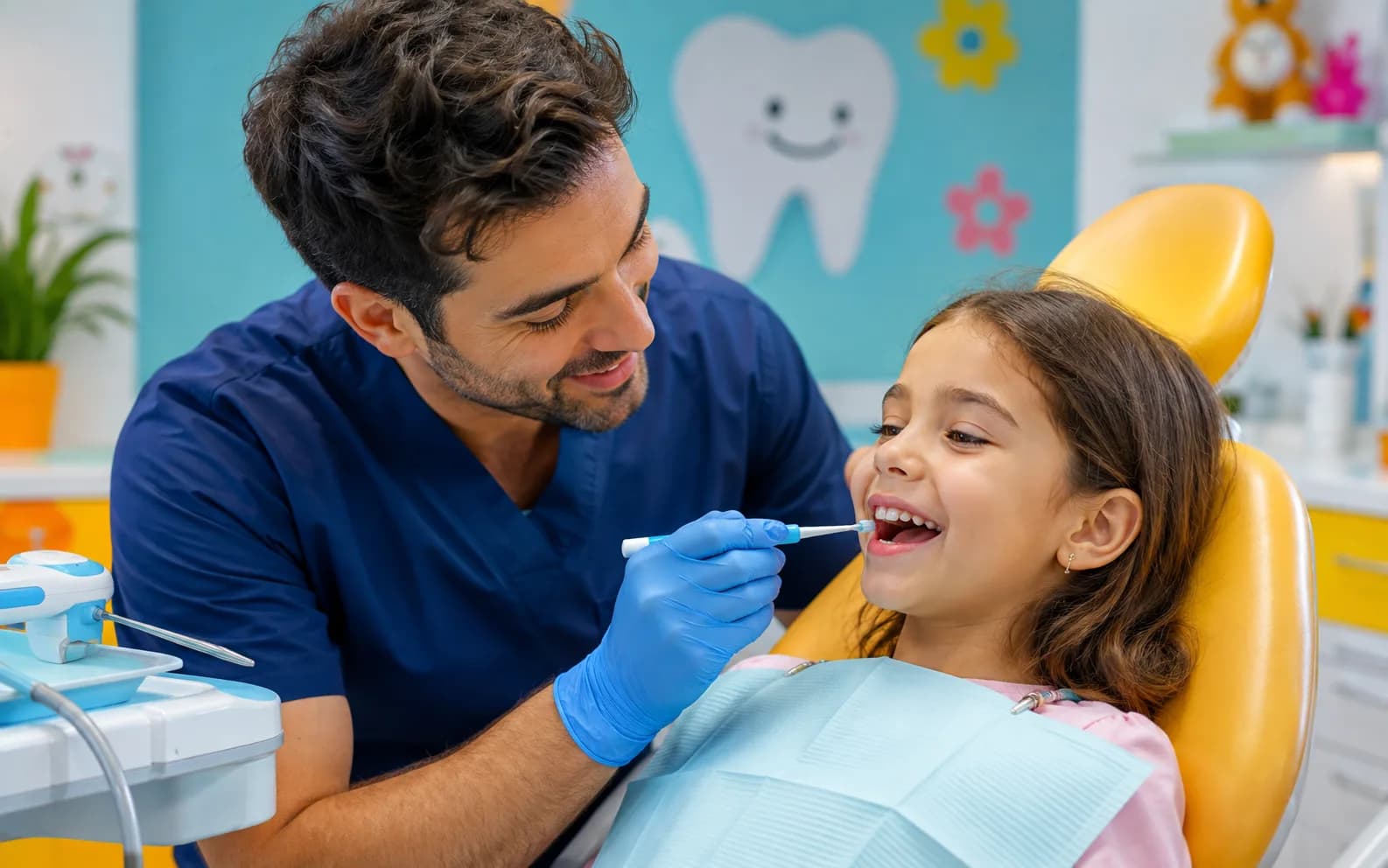
- Average duration
- 25 minutes
- Sessions
- Tek seans · 6 ayda bir kontrol
- Clinic
- Paediatric Dentistry
What is a fissure sealant?
The grooves on the chewing surface of molars are called fissures. They are narrower than a toothbrush bristle: the brush cannot reach in, while bacteria and food debris enter easily. Most childhood decay begins on these surfaces.
A fissure sealant fills these grooves with a flowable material, leaving the surface smooth.
The procedure
The tooth is cleaned and dried, the surface prepared, the flowable material placed into the fissures and light-cured. No tooth is drilled and no anaesthesia is used. It takes a few minutes per tooth.
The ideal time is when the permanent molar has fully erupted, usually at 6-7 and 11-13 years.
Fluoride application
Fluoride varnish increases the resistance of enamel to acid and helps arrest early lesions (white spots). The high-concentration varnish applied in the clinic does not replace fluoride toothpaste at home.
We ask that nothing is eaten or drunk for 30 minutes afterwards, and that teeth are not brushed that day.
Follow-up
Sealants can wear or partially come away over time. They are assessed at six-monthly check-ups and refreshed if needed. A sealant does not replace brushing or reducing the frequency of sugar; it works alongside them.
This page is general information and does not replace a dental examination. Whether the treatment suits you, and the method and duration, are decided only after an intraoral examination and radiographic assessment.
After treatment
- No food or drink for 30 minutes after fluoride varnish.
- Do not brush that day; return to normal the next morning.
- Very sticky and hard foods can wear the sealant.
- Sealant integrity is checked at six-monthly visits.
- A sealant does not replace daily brushing.
The information on this page is for general guidance and does not replace a dental examination. Treatment decisions are made after an intraoral examination and radiographic assessment.
Related treatments
Examination first, decisions after
Book an appointment: we will assess where things stand and talk through the options and how long each takes.
Your request is confirmed the same day.