
Fixed Braces (Orthodontics)
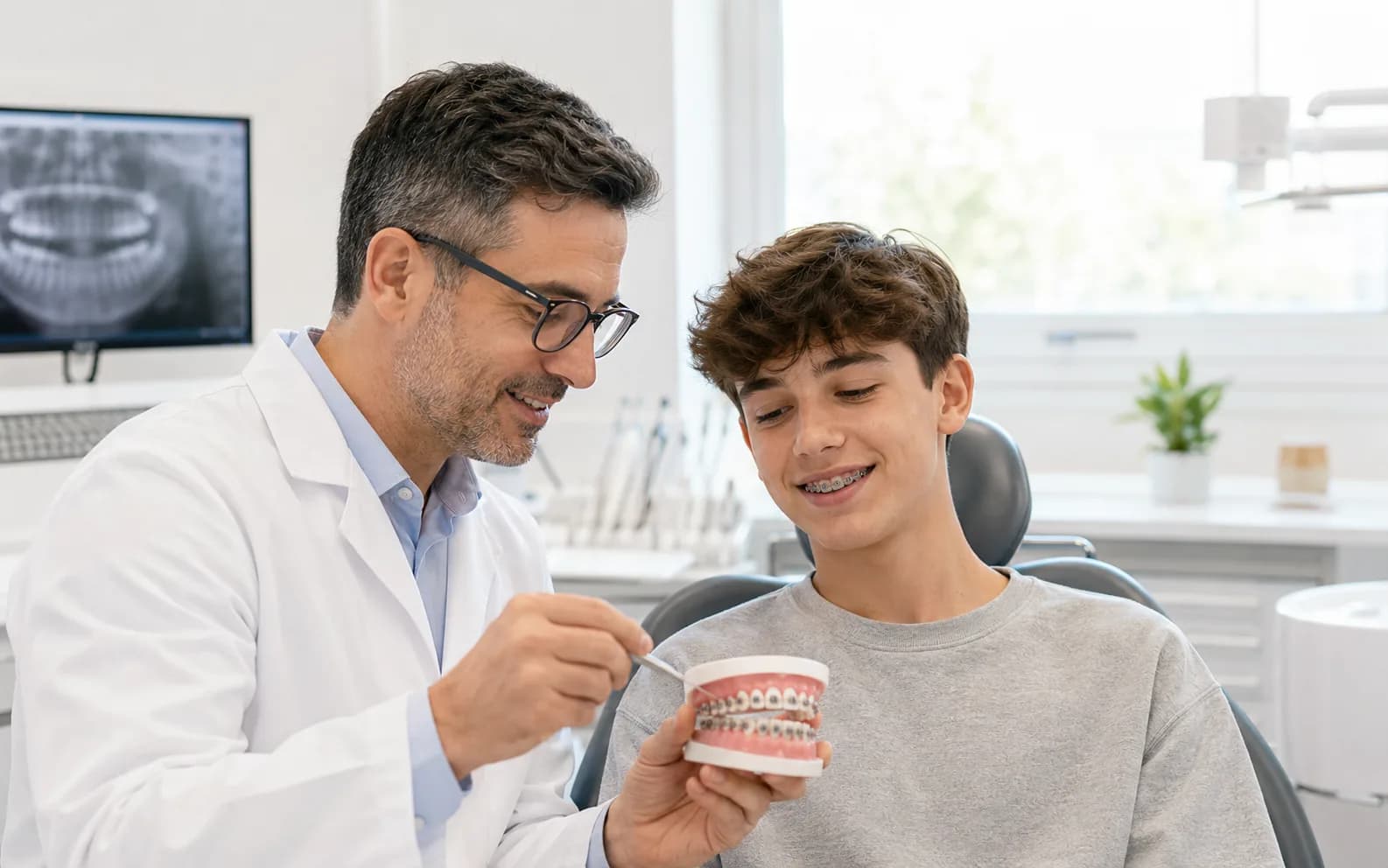
Classic orthodontic treatment with metal or ceramic brackets, offering the widest control in complex tooth and bite problems.
- Average duration
- 45 minutes
- Sessions
- Ortalama 12-24 ay · 4-6 haftada bir kontrol
- Clinic
- Orthodontics
Why brackets still matter
Aligner technology has advanced, but brackets remain orthodontics' most controlled tool. Because a bracket is bonded to the tooth it does not depend on patient compliance, and it gives more predictable results for root movement, severe rotation and bringing an impacted tooth into the arch.
The choice is made on the type of movement required, not on appearance. Which method genuinely fits is discussed at the examination alongside the measurements.
Bracket options
Metal brackets are the most robust and the most widely used. Ceramic brackets are close to tooth colour and less noticeable; they achieve the same movements but are somewhat more fragile.
The process
- Records and analysis. Intraoral scan or impression, photographs, panoramic and cephalometric radiographs. Cephalometric analysis shows whether the problem comes from the teeth or the position of the jaws — the plan is built on that distinction.
- Preparation. Decay and gum treatment are completed first. Brackets accelerate decay in an unhealthy mouth.
- Bonding. Brackets are bonded and the first archwire placed. This is painless and needs no anaesthesia.
- Adjustments. Wire changes and activation every four to six weeks.
- Debonding and retention. At the end the brackets are removed, the tooth surfaces cleaned and a retainer provided.
Discomfort and adaptation
Pressure and tenderness on chewing for two to three days after the first wire and after each activation are usual. Soft food is enough during that time. Orthodontic wax helps if the cheek or lip is irritated.
Cleaning: what really determines the outcome
Brackets create an ideal surface for plaque. Cleaning neglected around them leaves white spots (demineralisation) when the braces come off, and those marks are permanent. Orthodontic patients are therefore given interdental brushes, an orthodontic brush and a fluoride rinse together, and cleaning is assessed at every review.
Retention
Retention is part of the treatment, not something after it. A retainer must be worn until the teeth settle in their new positions — and to a degree lifelong; otherwise relapse is the expected outcome.
This page is general information and does not replace a dental examination. Whether the treatment suits you, and the method and duration, are decided only after an intraoral examination and radiographic assessment.
After treatment
- Keep to soft food in the first days and after each adjustment.
- Avoid hard (nuts, ice), sticky (gum, toffee) and stringy foods.
- Cut apples and bread rather than biting into them.
- Brush after every meal with an orthodontic brush and use interdental brushes.
- If a bracket or wire comes loose, call us rather than waiting for the next visit.
- Wear the retainer provided at the end exactly as advised.
The information on this page is for general guidance and does not replace a dental examination. Treatment decisions are made after an intraoral examination and radiographic assessment.
Related treatments

Examination first, decisions after
Book an appointment: we will assess where things stand and talk through the options and how long each takes.
Your request is confirmed the same day.