
Bruxism Treatment & Night Guards
Reducing the load that night-time clenching and grinding place on teeth and jaw joints, with a custom-made guard.
- Average duration
- 30 minutes
- Sessions
- Ölçü + teslim · 2 randevu
- Clinic
- General Dentistry
What is bruxism?
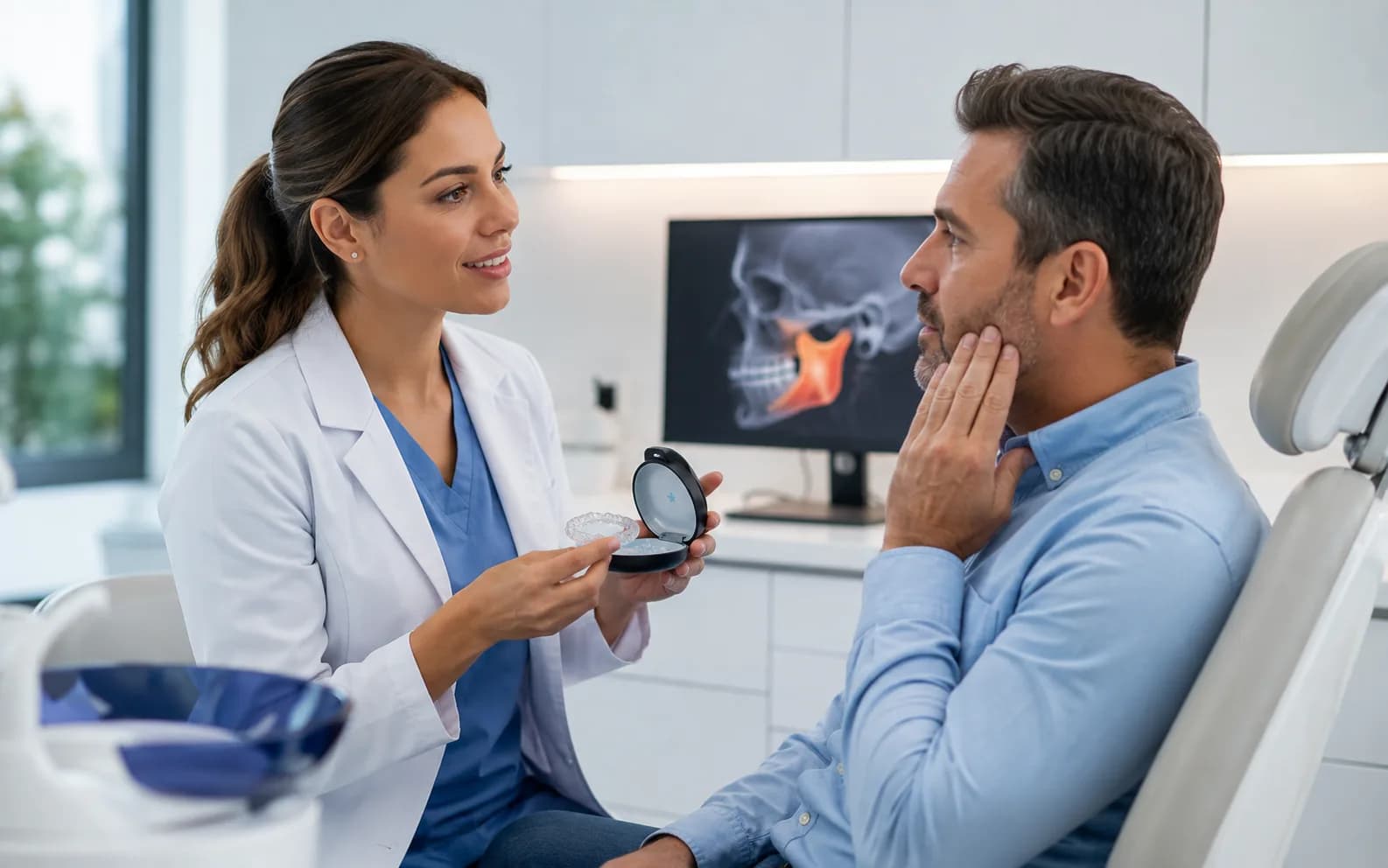
Bruxism is involuntary clenching or grinding, mostly during sleep. People are usually unaware of it; the diagnosis is often made when wear facets are seen at an examination.
Signs
Jaw fatigue in the morning, headache around the temples, flattened and worn tooth tips, sensitivity, repeated fracture of fillings or crowns, and noise or pain in the jaw joint.
Why it happens
There is no single cause. Sleep quality, stress, some medication, caffeine and alcohol, bite discrepancies and conditions such as sleep apnoea can all contribute. Treatment is therefore not just a guard; the underlying factors are assessed too.
What a night guard does and does not do
A guard does not stop clenching; it distributes the force onto the guard instead of the teeth. That reduces wear, fractures and damage to restorations, and eases the load on the jaw muscles.
The guard is made individually from an intraoral scan or impression. Ready-made soft guards do not distribute the bite correctly and can worsen symptoms in some patients.
Follow-up
Fit is checked after delivery. A guard wears down over time; it is reviewed annually and renewed when needed.
This page is general information and does not replace a dental examination. Whether the treatment suits you, and the method and duration, are decided only after an intraoral examination and radiographic assessment.
After treatment
- Wear the guard every night; occasional use gives no protection.
- Clean it each morning with cold water and a soft brush, not toothpaste.
- Never rinse it in hot water; it will distort.
- Store it dry in its case when not in use.
- Book a review if you notice cracks or wear on the guard.
- Reducing caffeine and alcohol in the evening may ease symptoms.
The information on this page is for general guidance and does not replace a dental examination. Treatment decisions are made after an intraoral examination and radiographic assessment.
Related treatments
Examination first, decisions after
Book an appointment: we will assess where things stand and talk through the options and how long each takes.
Your request is confirmed the same day.