
Paediatric Dentistry
Treatment of milk teeth, fissure sealants and fluoride, with a first dental experience that does not create fear.
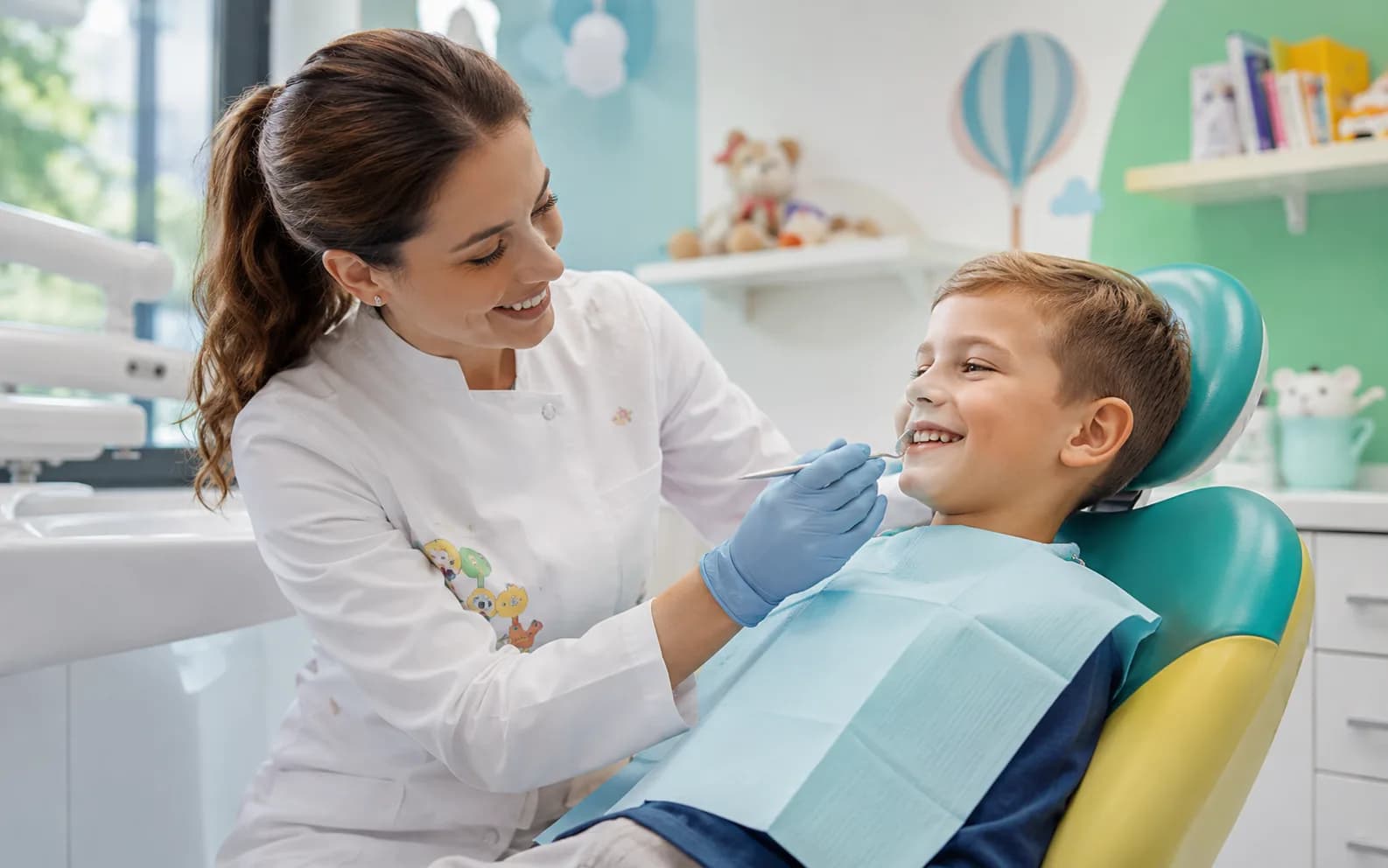
- Average duration
- 30 minutes
- Sessions
- Tanışma randevusu 20 dk · altı ayda bir kontrol
- Clinic
- Paediatric Dentistry
When should the first visit be?
Within six months of the first tooth appearing, and by the first birthday at the latest. The purpose is not treatment but introduction: seeing the chair, holding the mirror, meeting the dentist. If a child's first encounter with a dentist happens during a painful emergency, the fear settles that day and lasts for years.
Why decay in milk teeth matters
"They'll fall out anyway" is common and wrong. Milk teeth serve chewing, speech and — crucially — hold space for the permanent teeth. A primary molar lost early lets the tooth behind drift forward, so the permanent tooth has nowhere to erupt; orthodontic treatment may then be needed.
Deep decay in a milk tooth can also affect the permanent tooth germ developing beneath it.
Preventive care
Fissure sealants
The grooves on the chewing surface of permanent molars are too narrow for a brush to reach. These surfaces are sealed with a flowable material. The procedure is painless, needs no anaesthesia and takes a few minutes.
Fluoride application
Fluoride raises the resistance of enamel to acid. The high-concentration varnish applied in the clinic does not replace fluoride toothpaste at home; the two work together.
Diet and brushing habits
A child cannot clean their teeth well enough alone until around age seven or eight. Until then a parent should finish the evening brushing. Milk or juice given in a bottle at night is the most common cause of the rapidly progressing decay known as bottle caries.
How we work with children
Children's appointments are scheduled for the morning, when they are rested. The procedure is explained in age-appropriate language (tell-show-do). We do not force, mislead, or make promises we cannot keep such as "it won't hurt at all"; once trust is broken it is very hard to win back.
Where cooperation is not possible because of severe anxiety or very young age, sedation options are assessed separately and discussed with the family.
This page is general information and does not replace a dental examination. Whether the treatment suits you, and the method and duration, are decided only after an intraoral examination and radiographic assessment.
After treatment
- No food or drink for 30 minutes after fluoride varnish.
- Sealants are checked at each visit; hard food can wear them.
- Finish the evening brushing yourself until age seven or eight.
- Do not give milk or juice in a bottle at night.
- Use an age-appropriate fluoride toothpaste, a pea-sized amount.
- Keep to a check-up every six months.
The information on this page is for general guidance and does not replace a dental examination. Treatment decisions are made after an intraoral examination and radiographic assessment.
Related treatments

Examination first, decisions after
Book an appointment: we will assess where things stand and talk through the options and how long each takes.
Your request is confirmed the same day.