
Wisdom Tooth Removal
Planned surgical removal of impacted or partially impacted wisdom teeth without harming the neighbouring tooth or the nerve.
- Average duration
- 40 minutes
- Sessions
- Tek seans · dikiş kontrolü 7-10 gün sonra
- Clinic
- Implants & Oral Surgery
Does every wisdom tooth need to come out?
No. A wisdom tooth that sits correctly, meets its opposing tooth and can be cleaned is left alone. The decision to remove rests on specific findings: recurrent inflammation of the overlying gum (pericoronitis), decay or root resorption in the adjacent molar, cyst formation, obstruction of planned orthodontic treatment, or a position that makes cleaning impossible.
Assessment
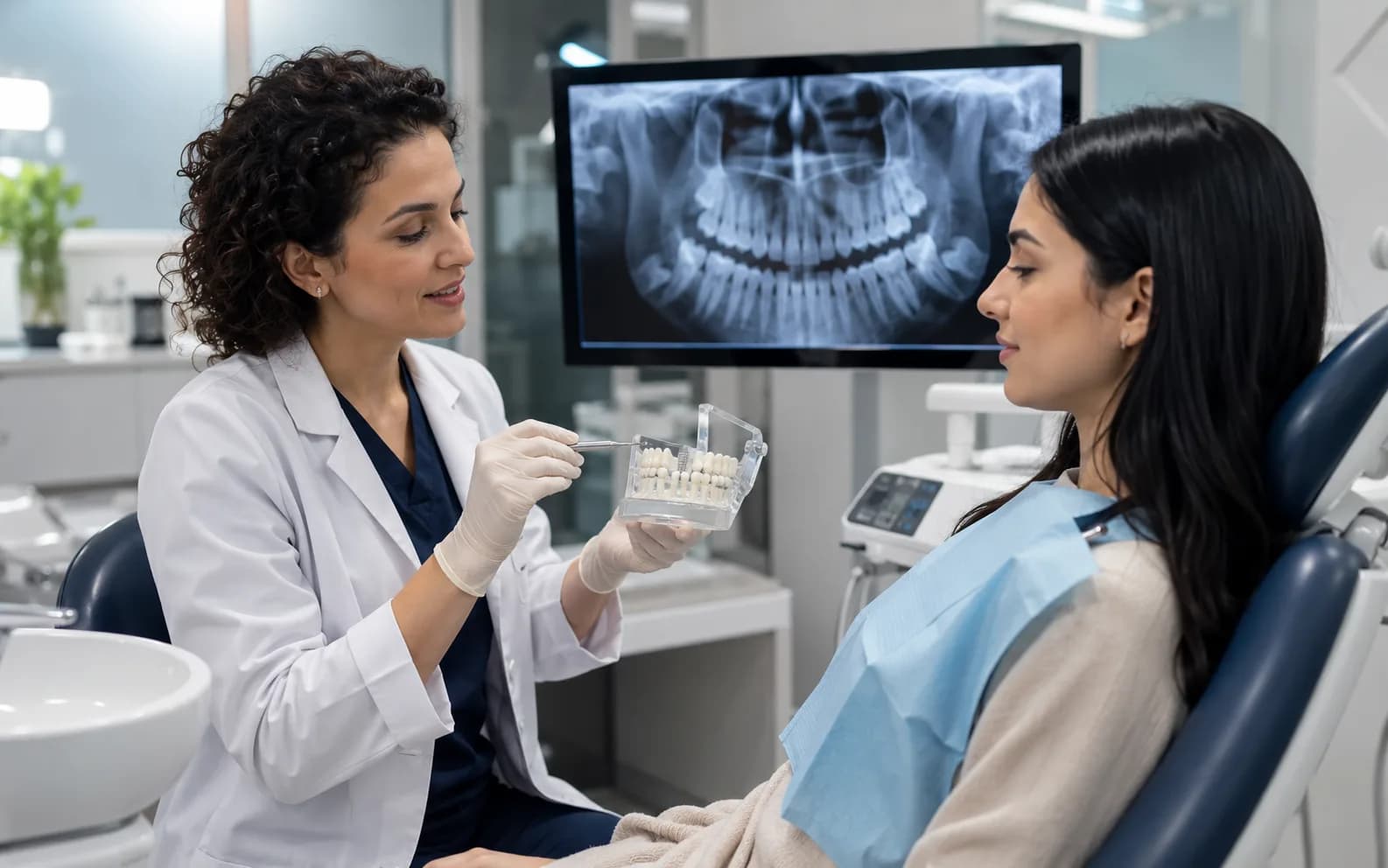
A panoramic radiograph is the first step. If the relationship between the roots and the inferior alveolar nerve looks equivocal, three-dimensional tomography is requested — not as an extra, but because it is the only way to see the risk. Surgery without knowing where the nerve runs raises the chance of temporary or permanent numbness unnecessarily.
How it is done
The procedure is performed under local anaesthesia; where anxiety is high, sedation is discussed as a separate option. The gum is reflected, bone over the tooth is removed if needed, and the tooth is sectioned and taken out in pieces. Sectioning costs less bone and heals faster than forcing the tooth out whole. The site is cleaned and sutured.
For a single tooth the procedure usually takes 20 to 40 minutes.
Afterwards
Protecting the clot in the first 24 hours is essential: do not spit, do not suck, do not drink through a straw. Swelling peaks on the second or third day and then subsides. Cold on day one; warm rinses from day two.
Dry socket is the most common complication and is usually related to early loss of the clot; smoking raises that risk markedly. If pain increases rather than decreases after the third day, call the clinic.
Risks
As with any surgery, bleeding, infection and swelling are possible. Lower wisdom teeth carry a risk of temporary numbness of the lip and chin because of nerve proximity; upper ones can communicate with the sinus. These possibilities are discussed in detail beforehand and appear on the consent form.
This page is general information and does not replace a dental examination. Whether the treatment suits you, and the method and duration, are decided only after an intraoral examination and radiographic assessment.
After treatment
- For the first 24 hours do not spit, rinse or use a straw.
- Apply cold on day one; from day two rinse gently with warm salt water.
- Avoid smoking and alcohol for the first week.
- Avoid hard, hot and spicy food for a few days.
- Attend the review appointment arranged for your sutures.
- Call us if pain increases after the third day or you cannot open your mouth fully.
Frequently asked about this treatment
No. A wisdom tooth that is correctly positioned, meets its opposing tooth and can be cleaned stays. Removal is based on concrete findings: recurrent infection, decay or root resorption in the neighbouring tooth, cyst formation, obstruction of an orthodontic plan, or a position that cannot be cleaned. Without symptoms, routine removal 'in case it causes trouble later' is not advised.
The information on this page is for general guidance and does not replace a dental examination. Treatment decisions are made after an intraoral examination and radiographic assessment.
Related treatments


Examination first, decisions after
Book an appointment: we will assess where things stand and talk through the options and how long each takes.
Your request is confirmed the same day.